


THIS EXISTS: Pirated vinyl, made with expensive silicones and liquid plastics
by Tyler Munro
May 3, 2012
This Exists uncovers and explores the musical peculiarities that exist in the dark corners of the internet, sometimes just outside the mainstream. Today we take at the incredibly tedious but nonetheless super real way in which you can make clones of your favourite vinyl albums.

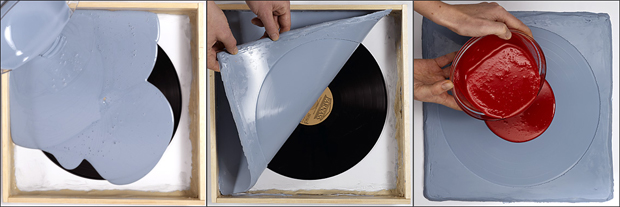
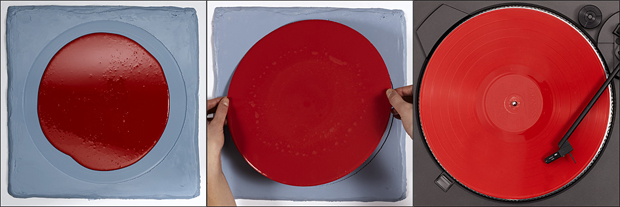
One of the arguments supporting the re-emergence of record collecting is the personal association that comes with holding a tangible, vinyl album in an age where abstractly natural sounding concepts like clouds and streams dominate how common-folk get their hands on new music. And an extension of this argument is how it relates to piracy: as things become more heavily digitized, they become easier to pirate as a result. We used cassette tapes to bootleg the radio, sure, but the second wave of CD consumerism came just in time for the Napster era and with it followed better sounding copies. It’s become even easier still in an age of digital promos and variable bit rate rips of pre-release streams. But not with records, we’re told. Records are a pain in the ass to rip to your computer, and therefore they’re harder to bootleg. Sure, you can do it. All you need is a pre-amp, which you can get for as little as $20-30 if you know where to look.
But did you know that vinyl has its own equivalent to burning CDs? And would you believe it’s actually a bigger pain in the ass than ripping through a pre-amp? The process, which was described on a now-dead article on QJ.net (translated from a German magazine and eventually rescued by Mike Senese), is an arduous one. You can make your own, tangible copies of a record with a little patience and some supplies, and we’ll outline how below, but prepare yourselves because it’s going to take like ten friggen hours.
So here’s what you’ll need:
- A glass plate, to use as the bottom of a case you’ll make using…
- Wooden strips, which you’ll seal onto the glass plate using…
- Window cement. It’s got to be air tight and properly sealed so that the…
- Silicone you’ve mixed doesn’t leak, allowing you to (6 hours later)…
- Pour on the plastic cement you’ve purchased, which, one dry, you will…
- Drill a whole through the centre of the record, which we hoped you remember to mark because whoops we forgot to point that out earlier
Follow these easy steps (illustrated above) and… you’re actually only halfway there. You’ve got a cool mould to do it again, but even then you’ve only just copied one side of the record. And if you’ve done this with any air bubbles on the cast, you’re going to hear some screeches and blurps that’d make a record’s usual pop sound like an angel’s lullaby.
We haven’t tried this ourselves—because honestly, who has the time—but there’s no reason to think it wouldn’t work. Assuming you’ve used the right kind of silicone (the original article, which was translated from German, says to mix Smooth-On OOMOO 25 and 30), you’ll have a perfect cast of the record’s indents and waveforms. Then, assuming you don’t fuck up the plasticizing part of the process, you’ll have one side of your favourite record. Or, more likely, one side of a record you didn’t mind ruining.
Oh, and here’s one part we left out: this shit is expensive. The silicone you’ll need costs about $25 a tub (at its cheapest), and you’re going to need two types to mix. A trial size of the TASK 4 liquid plastic recommended in the original article will run you another $28. So that’s about $60 (shipping not included) to presumably dupe a couple sides worth of albums. Hardly worth it, but if you’re into crafts and think papier mache is soooooooooo 2010, it’s an option. Not one we’d recommend or even try, but hey, be your own you.
Tags: Music, Featured, News, this exists